I am hoping to expand my film intake purely for the sake of being able to write more at this given time, considering the extreme amount of passion I've developed for this site. This has been one of the most affirming things I've ever taken on, this little corner of my world that I've put out there, not necessarily for anyone to find much as that would delight and affirm me even still more, but more so for the sake of being able to expand thoroughly and deliberately on my ideas, on the fact I have so much to say. I want to have more to say on the things I love, and as such, I want more things to love, and this is a part of that greater expansion.
I wanted to learn French. I've wanted to for a very long time, but I've always had a lot of difficulty properly dedicating myself to it, properly giving it the time I ought to. The language learning endeavour is not one I've been able to find either the right methods for or the right why further still. Perhaps the two are symbiotic and I am ignorant, but still. Nevertheless, I did take this on, which led me to the movies of Jean-Luc Godard, who I've already gone a real fondness for, between Breathless, Une Femme Est Une Femme and Vivre Sa Vie, all of which I'll discuss in one section. I also watched La Haine, in all it's glory, and I loved it, plus Wings Of Desire, which illuminated much of my beliefs about the human condition and had a great impact on me too. I watched Control, the Ian Curtis biopic, but that will be saved for it's own essay courtesy of how much of an impact it had on me. As usual, cinema proved fruitful. Also, goes without saying, SPOILERS!!!!!
Godard
Truly a distinctive cinematic voice, I'd known about Godard for a while, but never watched any of his movies proper until a little while ago. So far, I've watched those aforementioned three plus his short film In The Darkness Of Time, which was also beautiful, but I will focus on the others for greater capacity of interesting things to talk about.
Vivre Sa Vie is definitely my favourite of the bunch. Perhaps It is my own folly that stops me from fully appreciating the insight of his other works, but Vivre Sa Vie has a very specific dryness to it, an almost nihilistic undertone, but almost. Nana is an extremely compelling main character, a woman thrust by the whims of a cold uncaring world into a profession that truthfully serves more as an allegory for the commodification of human beings rather than any sort of a specific commentary on prostitution, at least in my view, but such a view I feel is rather justified in context of the film itself. Nana's exploits are never really elaborated upon in terms of any graphic detail, rather, Raoul, the pimp, presents us with a more deliberate striking analogy for the commidifying force of modern existence that turns people into products in ways greater than merely the search for a good fuck. Indeed, Raoul, in his cold-heartedness shooting her down, shoots down the very symbol of Woman, as Barthes' love of Balzac would put it, or rather, shoots down the hope that Woman seems to carry, the idea that Woman is more, alas, people are more than the flesh that binds them together in mating. It is a cruel way to end the movie, but it elaborates on the philosophical undertones much of Godard's work takes on, namely a rather shocking amount of allusions to the work of Albert Camus that are every bit as prevalent here as they are even more obviously in Breathless, for Raoul is effectively the same as Raymond, the pimp that Meursault befriends in The Stranger, and Michel, the central character of Breathless, is in many ways identical to Meursault himself.
Consider this, the central ethos of the plot of Breathless. Michel impulsively murders a policeman after having also impulsively stolen a car, and for the entire duration of the movie he continuously not only evades law enforcement without showing a hint of remorse for his actions, but he also attempts to woo a very educated woman, a lover of literature and a journalist who was capable of achieving great things, yet here he was not even remotely attempting to engage with her ideas, instead, resorting simply to wanting to fuck her! And forgive my usage of that term again and again, but such copulation does not imply the existence of love on any level especially in these two of Godard's movies that tie in very well to one another in terms of stylistic ethos; alas, Michel only wants to fuck Patricia, a sort of vanity that is emblematic of the relationship Meursault has with Marie, although his stance makes him considerably less insufferable in comparison to Michel, considering Meursault has a very consistent epistemological underpinning through which he justifies all of his horrendous actions, that being the absurd, the void that lies beyond. Michel embraces the absurd without even a remote understanding of what it implies to begin with. The distinction makes me love and relate to Meursault despite his very obvious misgivings, despite his lack of empathy, because he seems to have peered into the eye of oblivion in a way that comprehends, at least by the end of the book, the gravitas of such an endeavour. Such things cannot be similarly said of Michel. Nevertheless, this implies a real stylistic cohesion that I really like about Godard the more I engage with his work.. at least in relation to these two films.
I cannot say similar things about Une Femme Est Une Femme. Not a bad movie by any stretch, but I found it very difficult to uncover any sort of underpinning behind the whys of it all, or what any of it was implying, a movie that seems to tread around in comedy over things that probably ought not be comedic for it's entire runtime and ends up saying very little about womanhood. It is, I will say, very striking in terms of the way it's made, but I found myself a bit irritated with my complete inability to parse any sort of consistent underpinning comment about feminism or anything of the like throughout it. There are, of course, no absurdist allusions to be found here, although that could've been guessed, I imagine.
I am excited to watch more Godard, and interested to see where his ideas also relating to the inherent incompleteness of language lead him. I've been reading Lyotard lately (who I will write about extensively also when I feel like I have a good enough grasp of his incredible ideas), and his implementation of Wittgenstenian language games relates quite well to the ideas that Vivre Sa Vie presents in Nana's inability to properly communicate with herself, as well as the seeming pride she seems to have initially in her belief of free will being confronted with her doom. The conversation she has with the writer at the restaurant reflects this and serves as in some ways the impotice for her rejecting the rationalistic bent that led to her accepting her life of prostitution, instead appreciaiting the absurdity of romance.. and paying the price for it.
Wings Of Desire
One of a kind film, this. Damiel presents us with the ultimate case to embrace our humanities, this idea that we are made to feel and be affected and be fallible in our inclinations, that to feel and to be and to hurt in equal measure are the great gifts of being, aiding my conviction in the leap of faith in the opposite direction to Kierkegaard, which Damiel quite obviously takes on, towards personhood, towards the rejection of his extra-human nature, towards love and sex and pain. He marvels, at one point, in what is one of the greatest understated scenes I've ever seen, about the fact that blood has a taste. It is incredible and it adds to the fact that the core of humankind is the incompleteness thereof that I am irritated so often by the religious rejection of; that we are here, present often despite not feeling present, existing and feeling the cold of our sockless feet, feeling the anxiety of our incoming exams, feeling the breeze of the morning. It is that which binds us so continuously towards being.
There are appearances here by both Nick Cave And The Bad Seeds towards the end of the movie, the song From Her To Eternity gesturing at the ethos of the film, the same sort of unwillingness Damiel has towards rejecting being human. He learns that which no human ever could in loving Marion. There is earlier also an appearance from Crime And The City Solution that I love primarily for the fact that it features them during their stint with the immortal Rowland S. Howard, a man who my feelings towards can be boiled down to thinking that he was, put simply, really fucking cool.
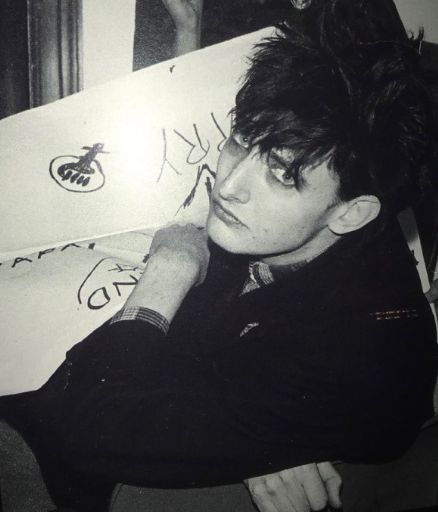
Ultimately, there is a bent towards humanism that I very much appreciate in Wings Of Desire, a rejection of the presupposed grandeur of extra-mortem existence and the embrace of the instability and the gluttony of being, that which the hedonism thereof, though not the traditional concept, is impossible to deny. To love being is to be, such stands Damiel's ultimate thesis in stark contrast to his friend Cassiel, who continues in his metasubhuman ways, his insistence on his duty. Perhaps in this lens, the mention of Kierkegaard earlier was useful as the subtext here guides us towards an inversion; Damiel becomes a knight of earthly faith first and foremost, the metric by which all people should measure themselves.
La Haine
A journey towards the pits of poverty. Hatred breeds hatred, so tells us Hubert in the middle of the movie, though later on finding himself contradicting himself, Vinz, the supposed hothead, finding himself incapable of being the Travis Baker, incapable of even blowing out the head of a skinhead who Hubert tells him the world would be better without, finding too much humanity withhin himself for that.
There is a very obvious note to be made here: the trio are not great people, to put it mildly. Of course, poverty by nature implies a continual moral decay as a result of the inaccessibility of education and the degredation of living standards as they breed in people the exact hatred Hubert noted, though it seemed he was too short-sighted to see it in himself. Right after Hubert speaks of this hatred, a Gulag survivor comes out of the bathroom and speaks of the story of a man who refused to shit in public and paid the price for it courtesy of dying. The subtext is obvious: the hubris of these three young men bound up in the systems of hatred that the state continuously propogates that they cannot relieve themselves of led them to their doom. They are human and you empathise with their struggles and their hate considering the fact that their friend has been imprisoned and is likely to die at any moment, and their hate of the police is perfectly justified, but in that they embrace a gross sort of anarchistic bent, not one of empathy and the want to implode the state on itself for a directed liberation, some specific concept, but instead, they are driven by anger, by a rebellion against being itself, by the fact that the world, as Justin Trosper of Unwound put it when referring to himself and his band, "was not built for them".
The fact they are all minorities speaks to this; Vinz being Jewish and Saïd being Arab and Hubert being African of some variety only serves to illuminate the oppression they are made to be the recipients of, that the world quite literally was not built for them speaks to more than just the existential malaise, it speaks to the institutional fragmentation they endure, the inability to supercede the language game they have been trapped in, the inability to seek greater pastures for the fact that they are unable to play into the hands of that system, the rebellion becoming an unruly fire that swallows everything up, themselves included by the end.
One has to wonder what happens to Saïd after the movie ends. After all, he is made to watch one of his closest friends die a violent death and possibly of his other friend too (I personally always interpreted this as both Hubert and the cop firing at the same time and dying), the annihilation not only of their bodies but of the entirety of their personhood by this very system because of the fact that a crony, the very same of the archetype Vinz despised and wanted to kill, blows his own head off. Then, his other best friend either die or kill or both in the process of avenging his death, and what is he supposed to conclude? Can faith survive the laughter echoing out of the gunfire? Can identity extend enough to allow for his reaffirmation, does there lie a fate for him wherein he does not end up splattered brains on the end of his spirit's rape? What becomes of the fervour of youth, what becomes of the ignorance of poverty, what becomes when hate breeds hate so cyclically? Is the loop perpetual? Saïd keeps falling, to continue the analogy of the film, but where will he land?
We are left to conclude these things ourselves, but I would implore everyone who reads this to take the same sort of stance that Damiel takes in Wings Of Desire. The ultimate rebellion, further still, lies in what Hubert tells Vinz right before he utters the line about hate: "You'd know this if you went to school." Not school as in the institution of education that perpetuates the notions of authority, but education as an individual liberation, as an appropriation of it's preconceived status. To emancipate this, individually and continuously on a macro scale on the micro level, is the only way to get over the domain of authority as power is knowledge and the structures of the state that continuously bind us and lead to this moral degradation that finds Vinz and Hubert willing to kill, that finds people like Said watching their friends get shot on the regular. I, myself, as a marginalised person, as an Arab queer man in the 21st century, find that this sort of emancipation of knowledge and the willing and difficult retreat out of the logic of oppression and into the irrationality of compassion that one can find after a thorough enough deliberation on how our political rationalities are dead ends to be the only possible escape one could ever find. It is in this that we make it so that more people like Vinz are not driven to more hate and that we take Hubert's initial dismay further, that we synthesise the two into not a blind hate but a willing, concentrated, intelligent tendency towards annihilation. Alas, that is unlikely. Hate breeds hate, and it is quite likely that regardless, Said will be driven to the exact same pit of destruction that Vinz was, and if Hubert doesn't die immediately, it's still just as likely considering what taking a life would do to him.
Such bleakness is not to be taken as axiomatic, of course. There are always ways out, and as I said, absurdity is the only way forward for it brings us out of the black and white haze of hate and into the vibrance of the greater realm of being.